

As we move through 2026, debating whether technology will replace certain job functions has become obsolete. Artificial intelligence in business is no longer a pilot project or a futuristic trend; it is the invisible operating system running the global economy. From sophisticated enterprise automation platforms to generative AI systems capable of producing code, video, music, and entire workflows in seconds, execution speed has been democratized.
Today, any organization has access to the exact same 2026 AI tools. And that is precisely where the great paradox of digital transformation is born: when processing power and automation are equally available to everyone, technology ceases to be a differentiator.
If every competitor is using the same algorithms to optimize their processes, where does the true competitive advantage lie? The answer isn’t found in servers—it’s found in people. Today’s true disruption is not technological; it is profoundly human.
“AI can generate answers with astonishing speed, but great ideas—those that break the mold and transform industries—are still born exclusively from human collaboration.”
The Perfect Copilot: Accelerating Productivity with AI Without Losing Our Bearings
There is no denying that AI-driven productivity has reached unprecedented heights. Software development teams write clean code faster, marketing departments prototype interfaces in record time, and accelerated learning allows professionals to master new skills in weeks rather than months.
AI is the ultimate copilot. It takes on the burden of grunt work, processes massive volumes of data to build analytical dashboards in seconds, and optimizes daily operational efficiency. It frees professionals from the friction of the blank page and the repetitive tasks that historically drained creative energy.
However, optimizing a process is not the same as questioning it. Executing a task faster does not guarantee that the task takes the business in the right direction. AI expands our capabilities, but it lacks the compass to decide where they should point.
What Silicon Cannot Replicate: Judgement, Intuition, and Critical Thinking
An algorithm trains on the past; it predicts the next word or the next move based on pre-existing patterns. By definition, AI excels at continuity but is limited when it comes to true breakthrough innovation.
The future of work belongs to those who master the skills that silicon cannot replicate:
- Critical Thinking: The ability to question data, read between the lines, and understand the ethical and social impact of a business decision.
- Intuition and Experience: That tacit knowledge not found in any language model’s training manual, but forged through years of successes, mistakes, and real-world market experience.
- Human Judgement: The capacity to make a risky or counterintuitive decision because the business context—or simple empathy for a client—demands it, even when the data suggests otherwise.
An advanced model can simulate an AI brainstorming session and spit out a list of fifty viable ideas in a single second. Yet, it takes human sensitivity to detect which of those ideas has the soul required to truly connect with a real audience.
Connecting to Empower: The Renaissance of Collective Intelligence
The best organizations in today’s business landscape are not using technology to silence talent, but to ignite it. The true quantum leap in business innovation happens when bridges are built between automation tools and the collective intelligence of teams.
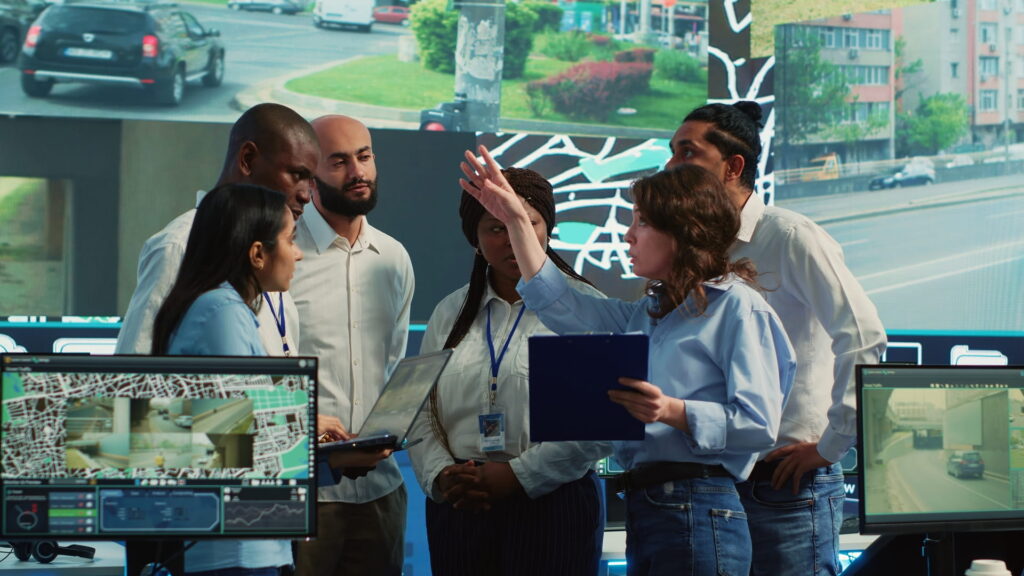
Designing a great digital product, solving a complex architectural problem, or creating a disruptive brand strategy requires a creative friction that only occurs when people come together to debate. True business magic is generated in the exchange of perspectives, in passionate debate, and in building together from diverse life experiences.
The companies that successfully lead the market will be those that redesign their workplace culture so that technology remains invisible while collaboration takes center stage. By automating the routine, we give teams back their most valuable asset: the time to think, connect, and co-create strategically.
A Vision for the Future: Leadership in the Era of Contextual Intelligence
Executive leadership requires a shift in focus. It is no longer about managing tasks, but about orchestrating capabilities. Maximizing the ROI of technology means understanding that the machine raises the floor of what is possible, but human talent defines the ceiling.
The destiny of competitive organizations will be shaped by a perfect symbiosis: a robust technological infrastructure driven by AI, guided by human capital hyper-focused on strategy, empathy, and human creativity.
Technology sets the speed, but human judgement and purpose determine the destination. At the end of the day, automation is just the means; human thought, talent, and collaboration remain—and always will be—the end.